Improve patient outcomes, streamline intake, and capture actionable Social Determinants of Health (SDOH) data.
What Are Social Determinants of Health (SDOH)?
Social Determinants of Health (SDOH) are the non-medical factors that influence patient health outcomes, including:
- 🍎 Food insecurity
- 🏠 Housing
- 🚗 Transportation
- 💼 Employment
- 🏥 Access to care
These factors often have a greater impact on health outcomes than clinical care alone, making SDOH screening a critical part of modern healthcare delivery.
Why SDOH Screening Matters for Clinics
Healthcare organizations are increasingly expected to go beyond clinical care and address the root causes of poor health outcomes.
SDOH screening helps clinics:
- Identify high-risk patients earlier
- Reduce no-show rates
- Improve chronic disease management
- Support value-based care initiatives
- Advance health equity goals
Without structured SDOH data, these insights are often missed or buried in notes and PDFs.
What Is the Gravity Project?
The Gravity Project is a national initiative focused on standardizing how SDOH data is collected, coded, and shared across healthcare systems.
It defines:
- Standard screening questions
- Structured data formats (LOINC, SNOMED, ICD-10)
- Interoperability using FHIR
What this means for clinics:
SDOH data can move beyond static forms and become part of your actionable, reportable patient record.

SDOH Screening with MIHIN (Michigan Health Information Network)
The Michigan Health Information Network (MIHIN) is a statewide health information exchange that enables providers across Michigan to securely share patient data.
MIHIN supports SDOH data exchange aligned with national standards like the Gravity Project, helping clinics contribute to broader population health efforts.
Real-World Usage
PatientLink is actively used by a Michigan-based clinic participating in MIHIN’s SDOH use case to:
- Digitally collect SDOH screening data during intake
- Capture structured, standardized responses
- Support participation in statewide data exchange initiatives
This means your clinic isn’t just collecting SDOH data – you’re contributing to a connected healthcare ecosystem.
Challenges with SDOH Screening Today
Most clinics struggle with:
Disconnected workflows
Paper forms or standalone tools slow staff down
Lack of EHR integration
Data ends up in scanned documents or notes
Limited reporting
Unstructured data makes it difficult to act on insights
How PatientLink Simplifies SDOH Screening
PatientLink delivers a fully integrated SDOH screening solution built into your existing patient intake workflow.
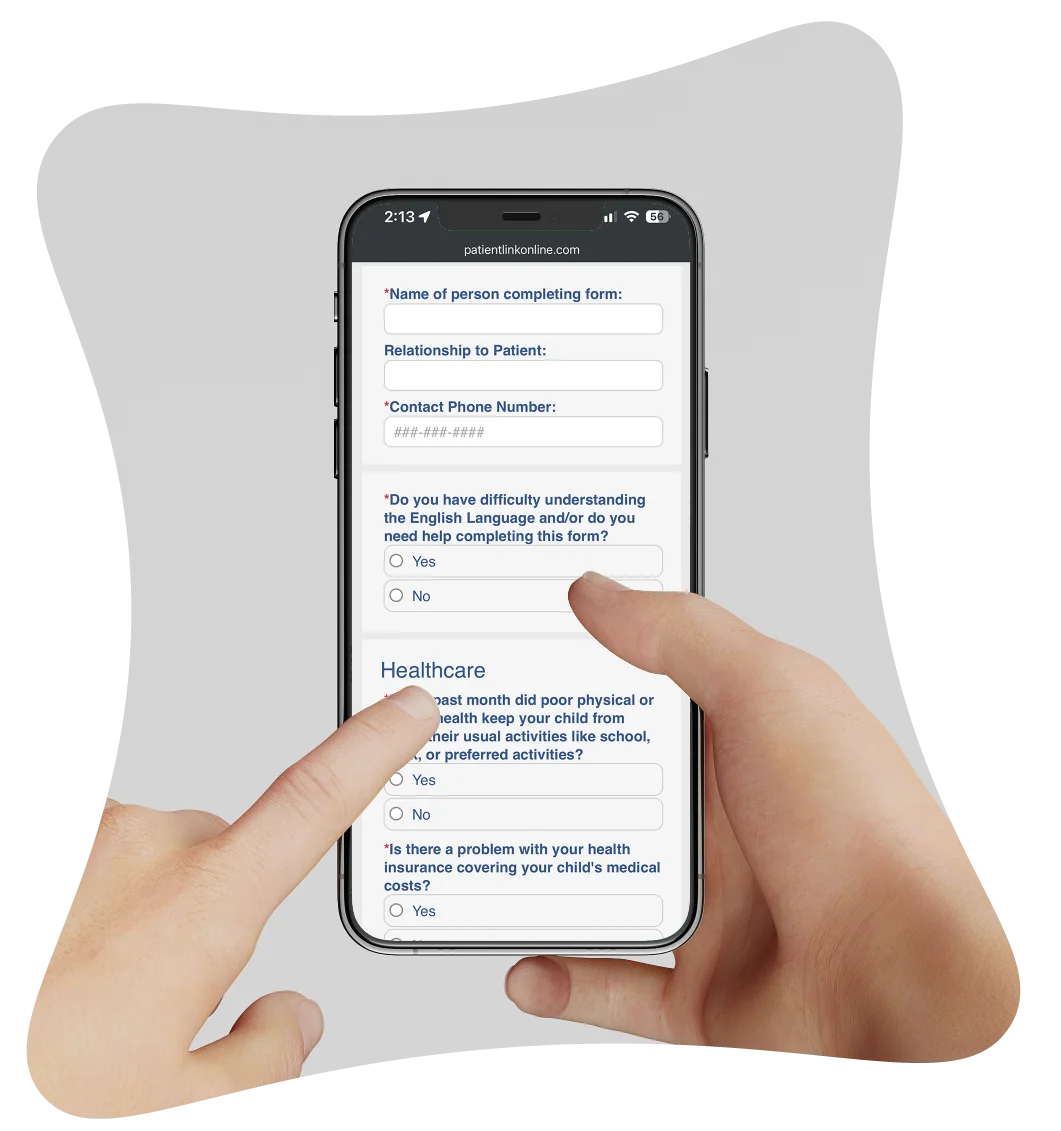
Digital SDOH Screening Forms
- Mobile-friendly and easy for patients
- Covers key SDOH domains
- Fully customizable
Seamless EHR Integration
- Eliminates manual data entry
- Keeps data inside your existing systems
Structured Reporting
- Identify trends and high-risk populations
- Support grants and reporting requirements
No Workflow Disruption
- No extra logins
- No added staff burden
- Fits into your current intake process
Example SDOH Data You Can Capture
With PatientLink, clinics can collect:
- Food insecurity screening responses
- Housing stability indicators
- Transportation access issues
- Employment and financial stress
- Social support needs
This data empowers providers to make more informed decisions and connect patients with appropriate resources.
Benefits of SDOH Screening with PatientLink
- Improve patient outcomes
- Reduce missed appointments
- Increase care plan adherence
- Support value-based care programs
- Align with emerging SDOH standards
- Participate in initiatives like MIHIN
SDOH Screening for FQHCs and Community Health Centers
Federally Qualified Health Centers (FQHCs) are on the front lines of addressing Social Determinants of Health (SDOH). From enabling services to UDS reporting, capturing accurate SDOH data is critical but often difficult to operationalize.
PatientLink makes it easy for FQHCs to implement SDOH screening without adding staff burden or disrupting workflows.
Built for FQHC Workflows
PatientLink supports the unique needs of FQHCs by:
- Embedding SDOH screening directly into patient intake
- Reducing manual data entry for front desk and enabling services teams
- Capturing structured data that can be used for reporting and outreach
Support for Enabling Services & Care Teams
SDOH data collected through PatientLink helps:
- Identify patients in need of enabling services
- Improve care coordination across teams
- Support referrals to community-based resources
Align with Reporting & Grant Requirements
FQHCs are increasingly expected to demonstrate impact on patient populations.
With PatientLink, you can:
- Track SDOH trends across your patient population
- Support UDS and grant-related reporting
- Prepare for evolving requirements tied to health equity and value-based care
Real-World Relevance
PatientLink is already being used by clinics participating in initiatives like the Michigan Health Information Network (MIHIN), where SDOH data contributes to broader population health efforts.
For FQHCs, this means your SDOH data isn’t just collected – it becomes part of a larger, connected care strategy.
Who This Is For
PatientLink is ideal for:
- FQHCs and community health centers
- Multi-location medical practices
- Organizations participating in HIEs like MIHIN
- Clinics preparing for SDOH reporting requirements
Get Started with SDOH Screening
If you’re looking for a simple, effective way to implement SDOH screening without adding complexity, PatientLink can help.
Request a demo today to see how it works within your existing workflow.